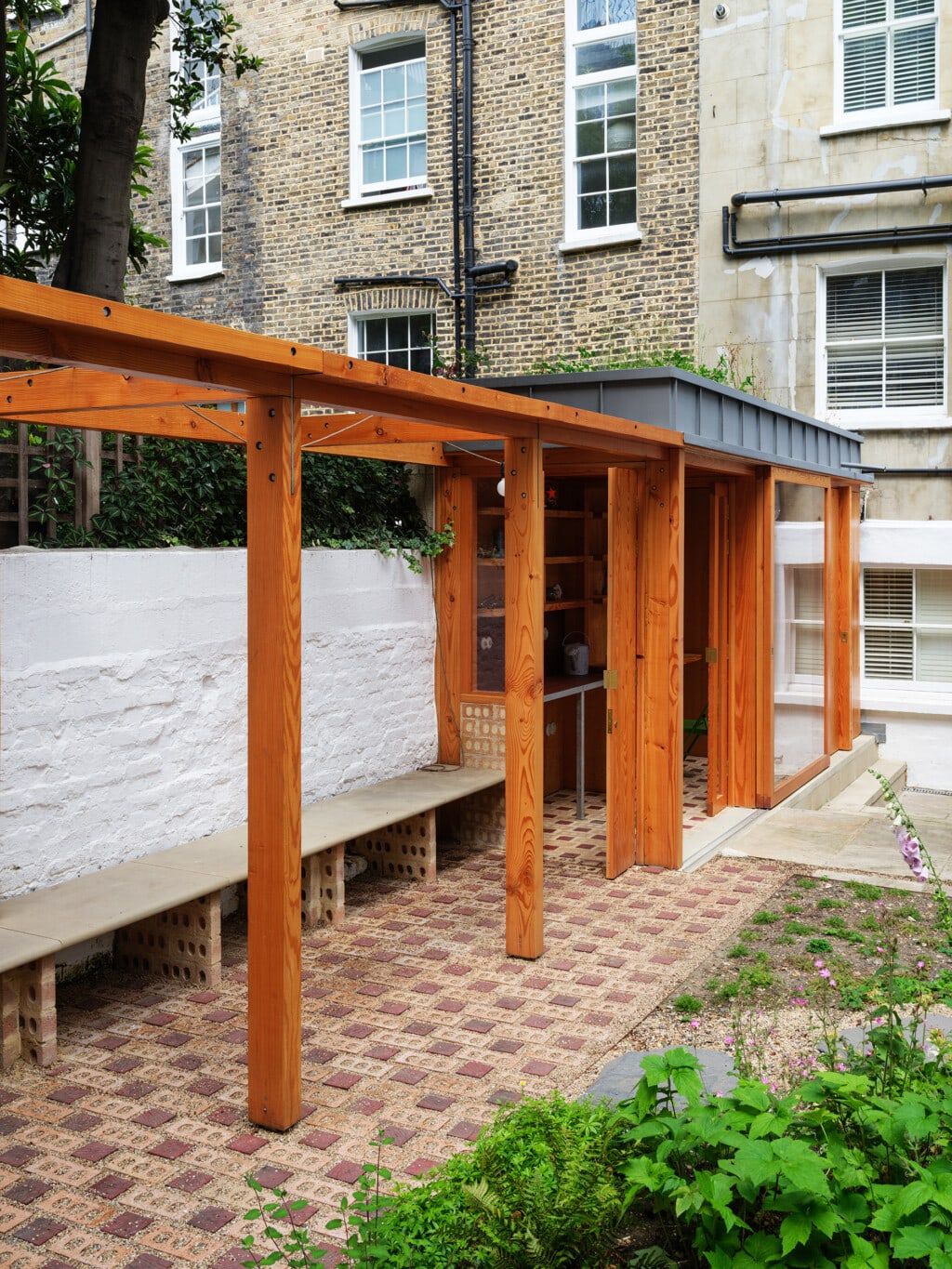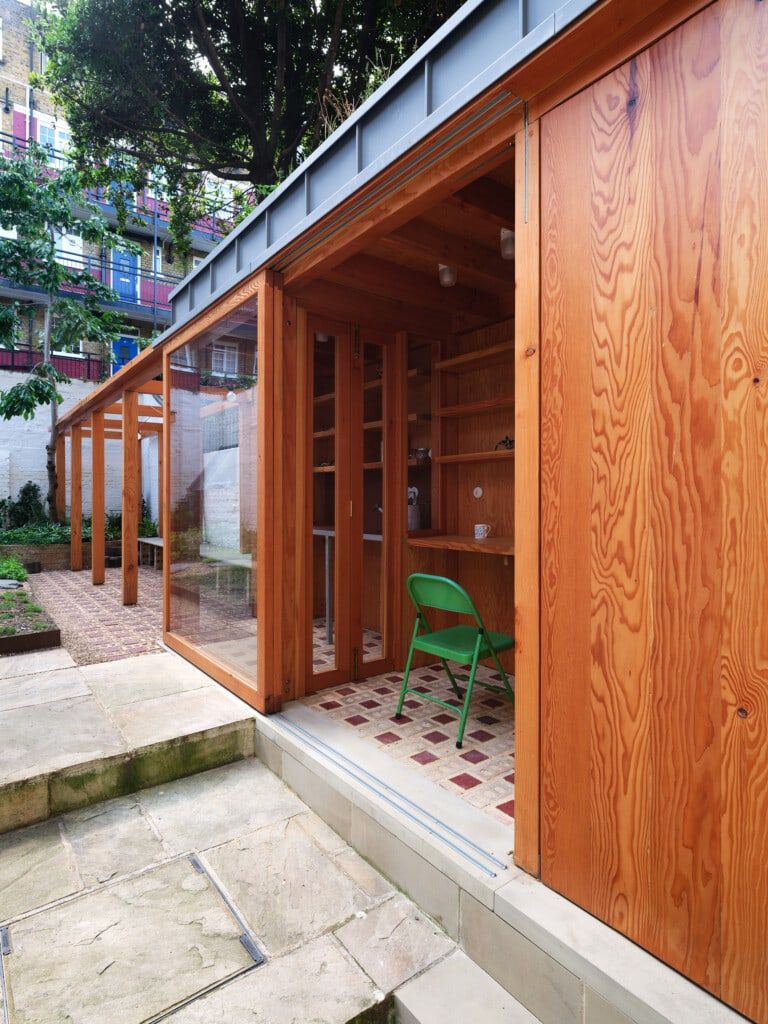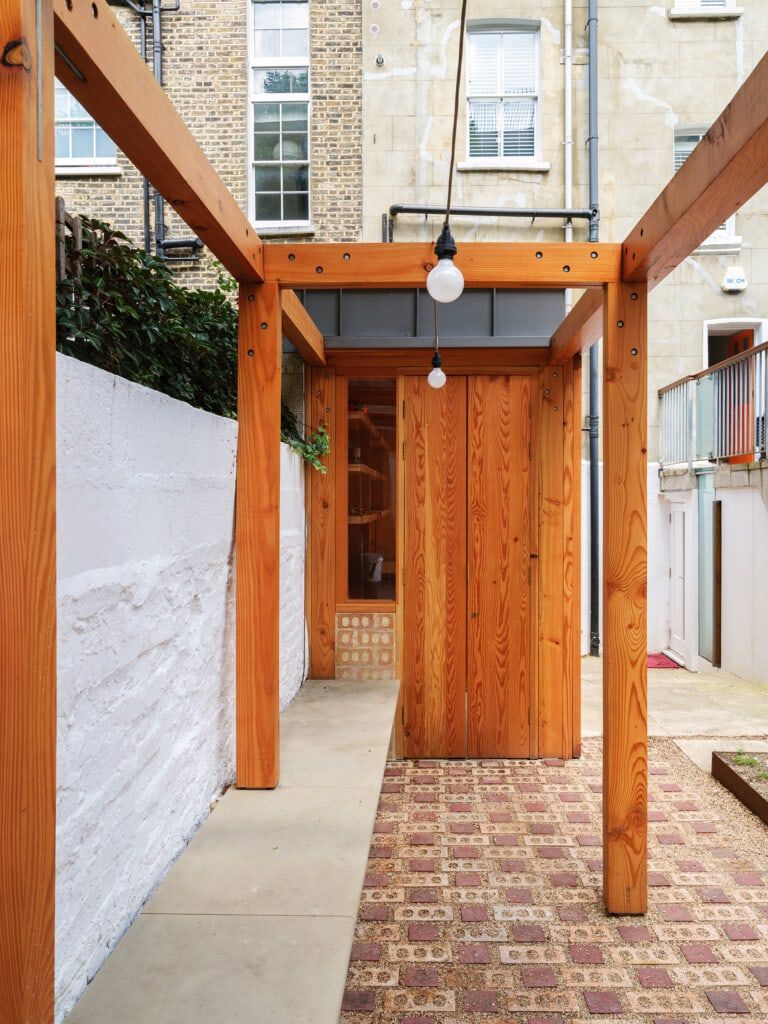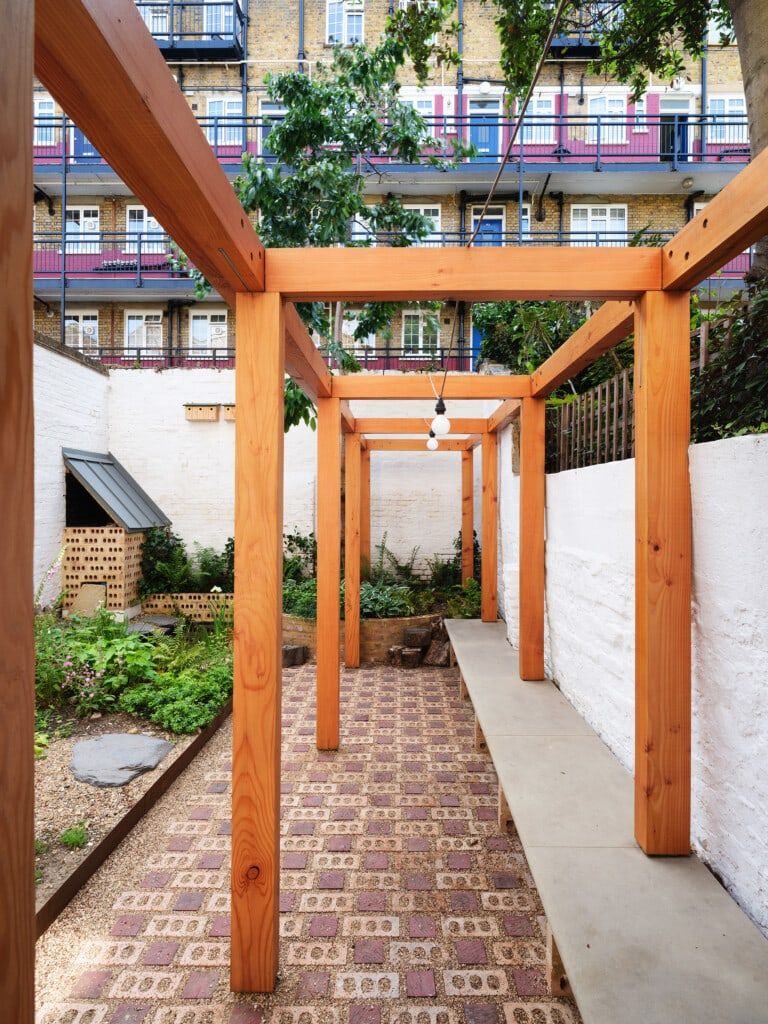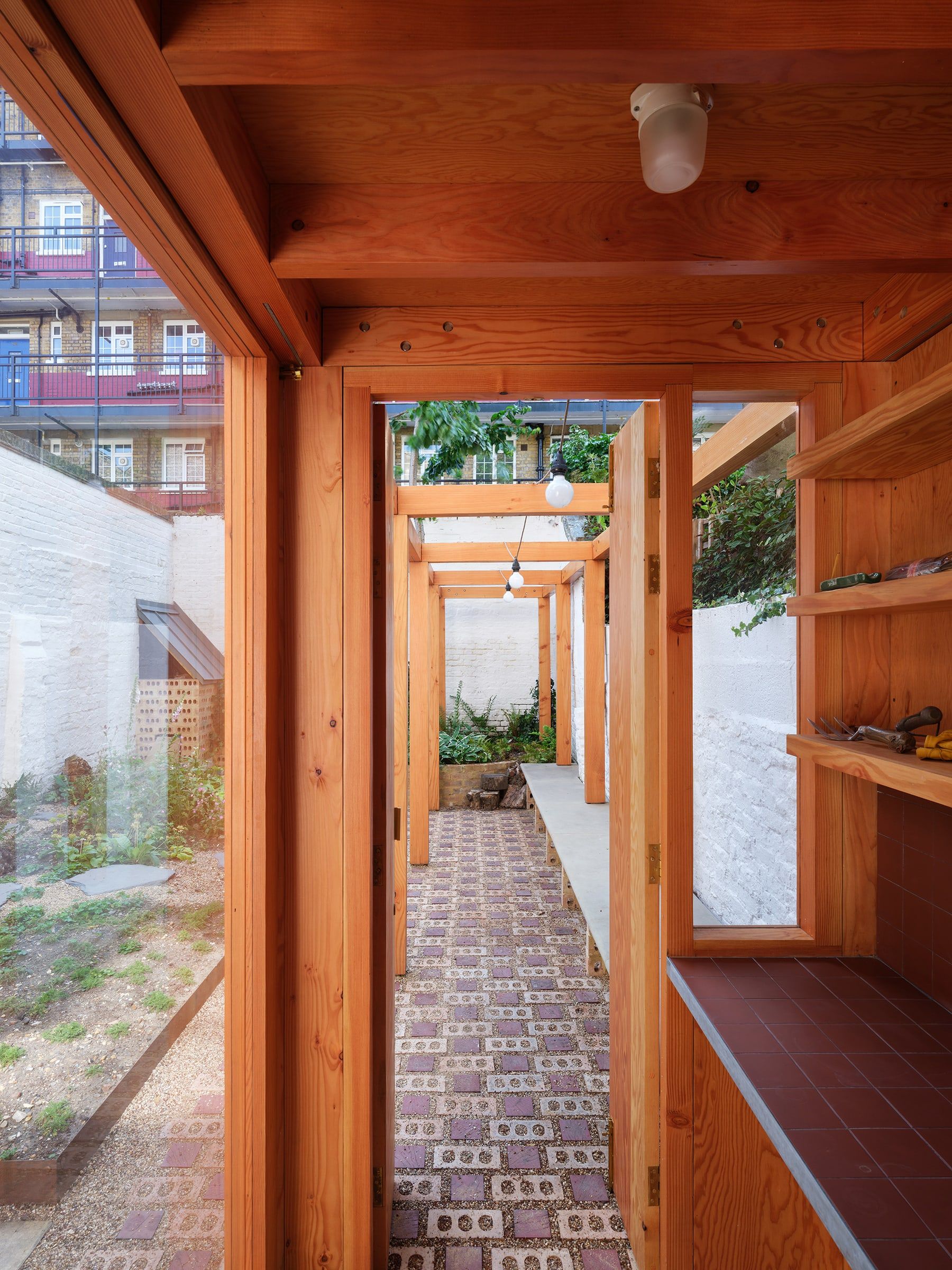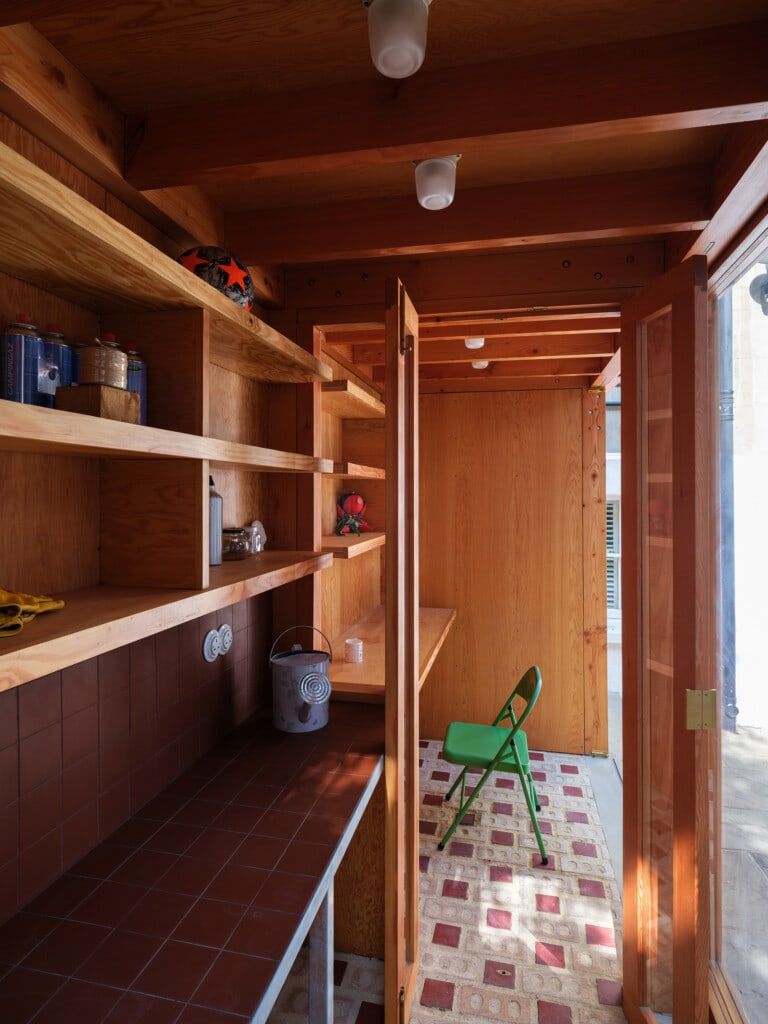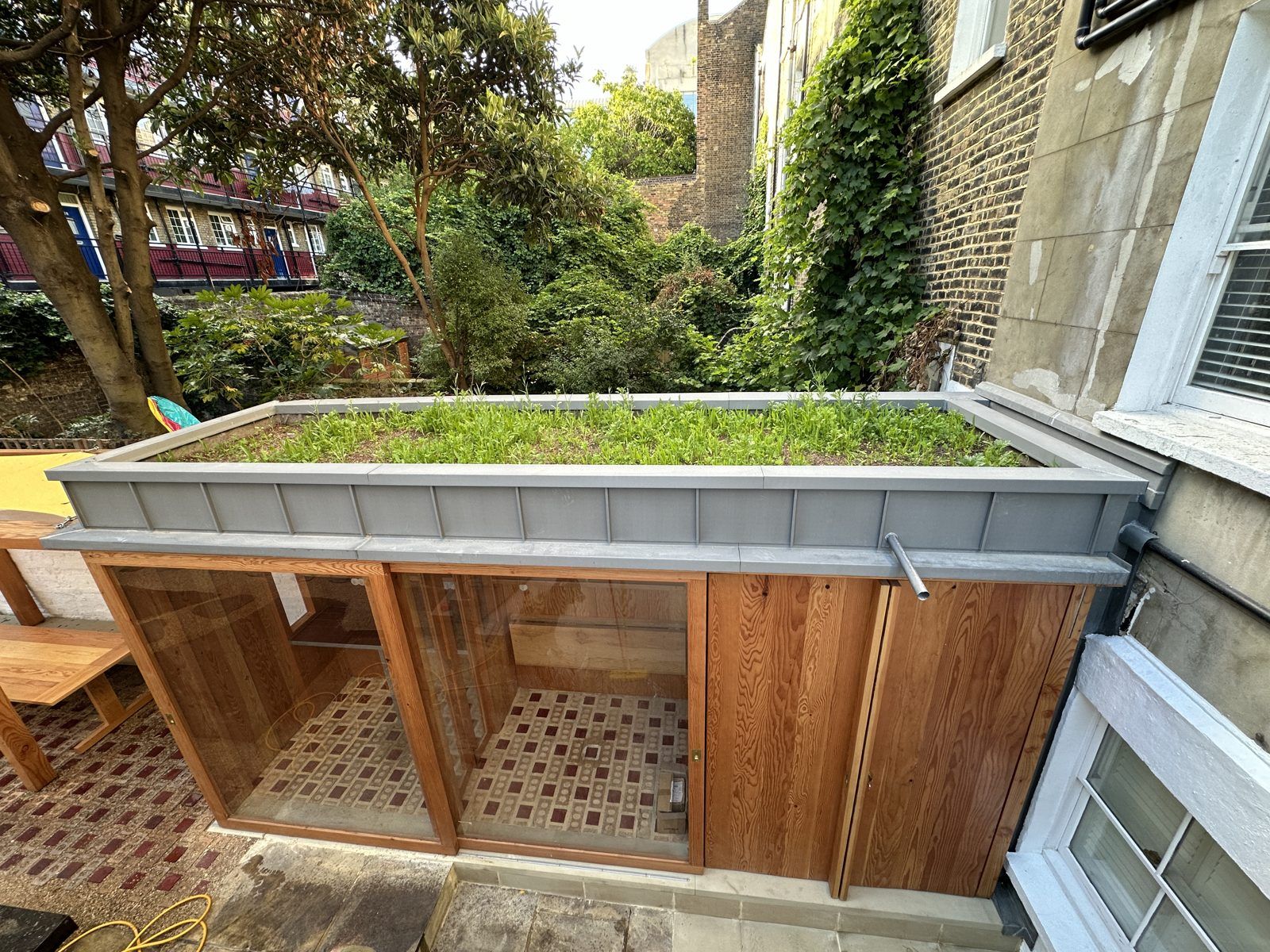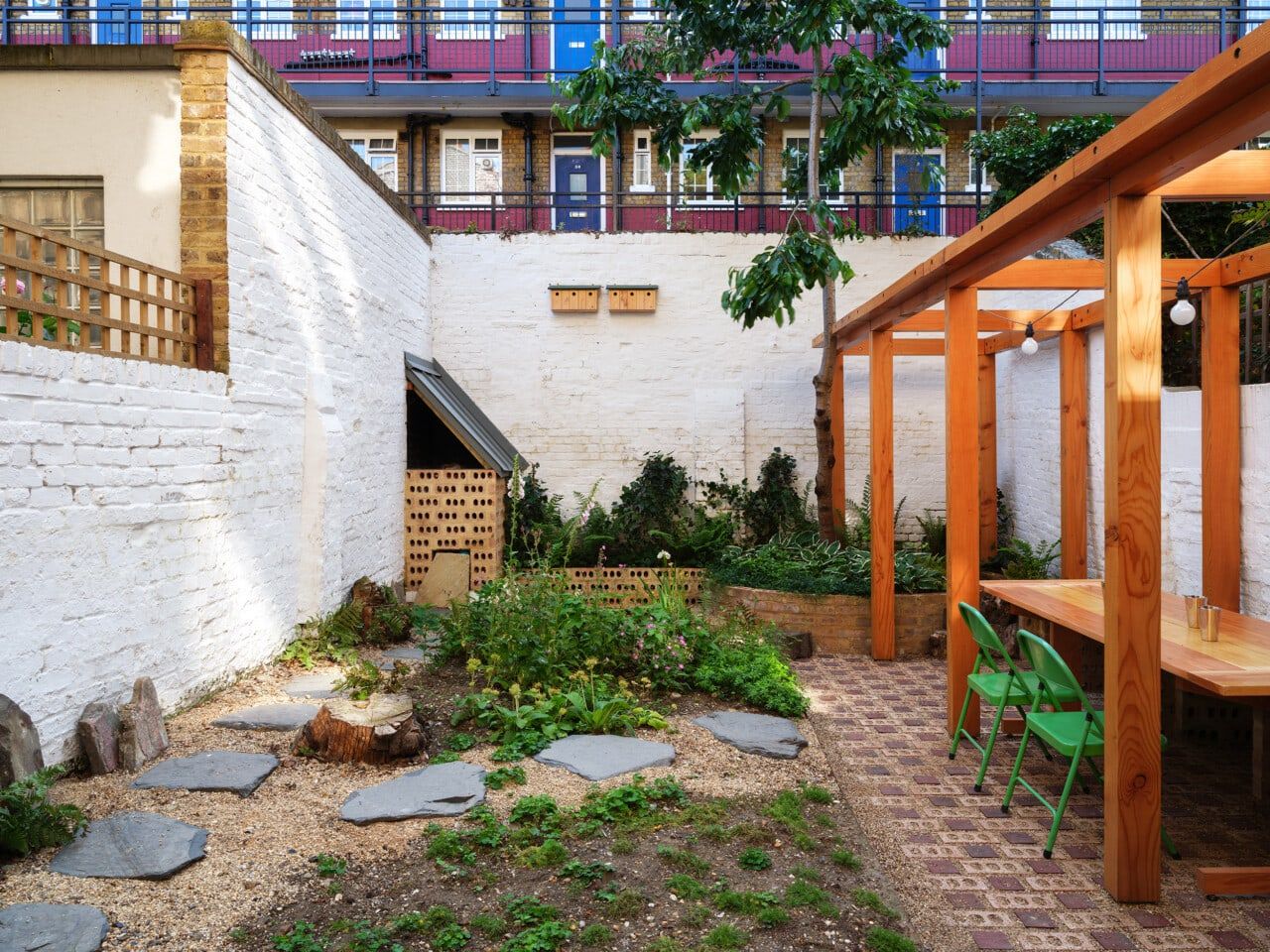
A garden building at a Grade II-listed four-storey townhouse in the Regent’s Canal Conservation Area was dismantled and replaced with a new timber-framed extension. The design came from an award-winning RIBA-accredited architectural studio, and LACD led the construction. The brief was to add a usable garden room without harming the listed house, the historic paving or a mature cherry tree, and to build it from low-impact materials.
Project facts
- Location: Shepherdess Walk, London N1, Regent’s Canal Conservation Area
- Property: Grade II-listed four-storey townhouse
- Work: demolition of an existing outbuilding; new timber-framed garden extension; landscaping
- Design team: award-winning RIBA-accredited architectural studio
- Services: house extension, joinery, landscaping
Scope of works
Site preparation and heritage
- Provisional asbestos survey and safe removal before demolition
- Existing outbuilding dismantled, original Yorkstone pavers lifted and stored for reuse
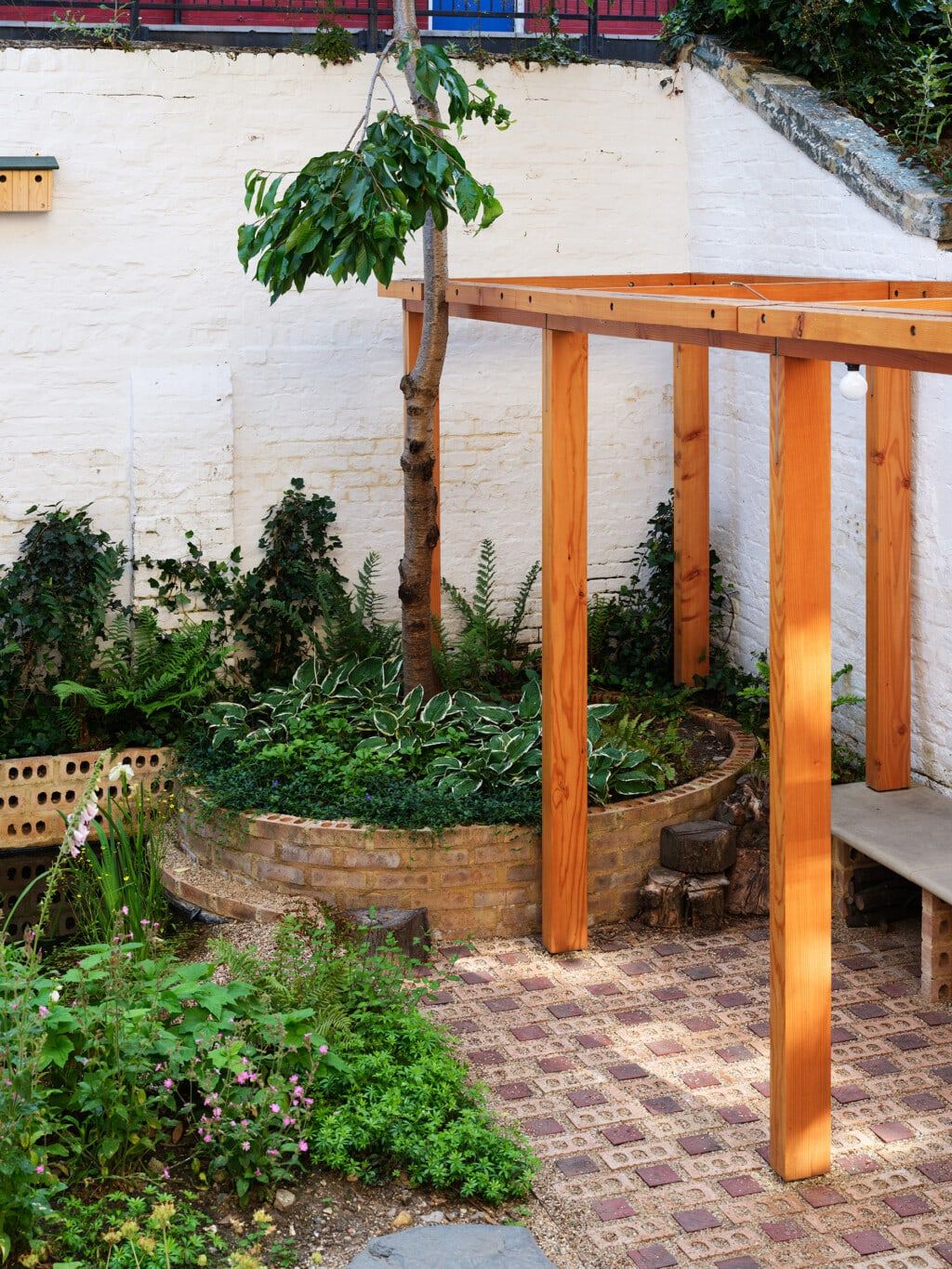
- Mature cherry tree and established planting protected throughout
Substructure
- Screw-pile foundations, chosen to avoid deep excavation near the tree roots
- Visqueen Radon R400 co-polymer membrane
Structure and envelope
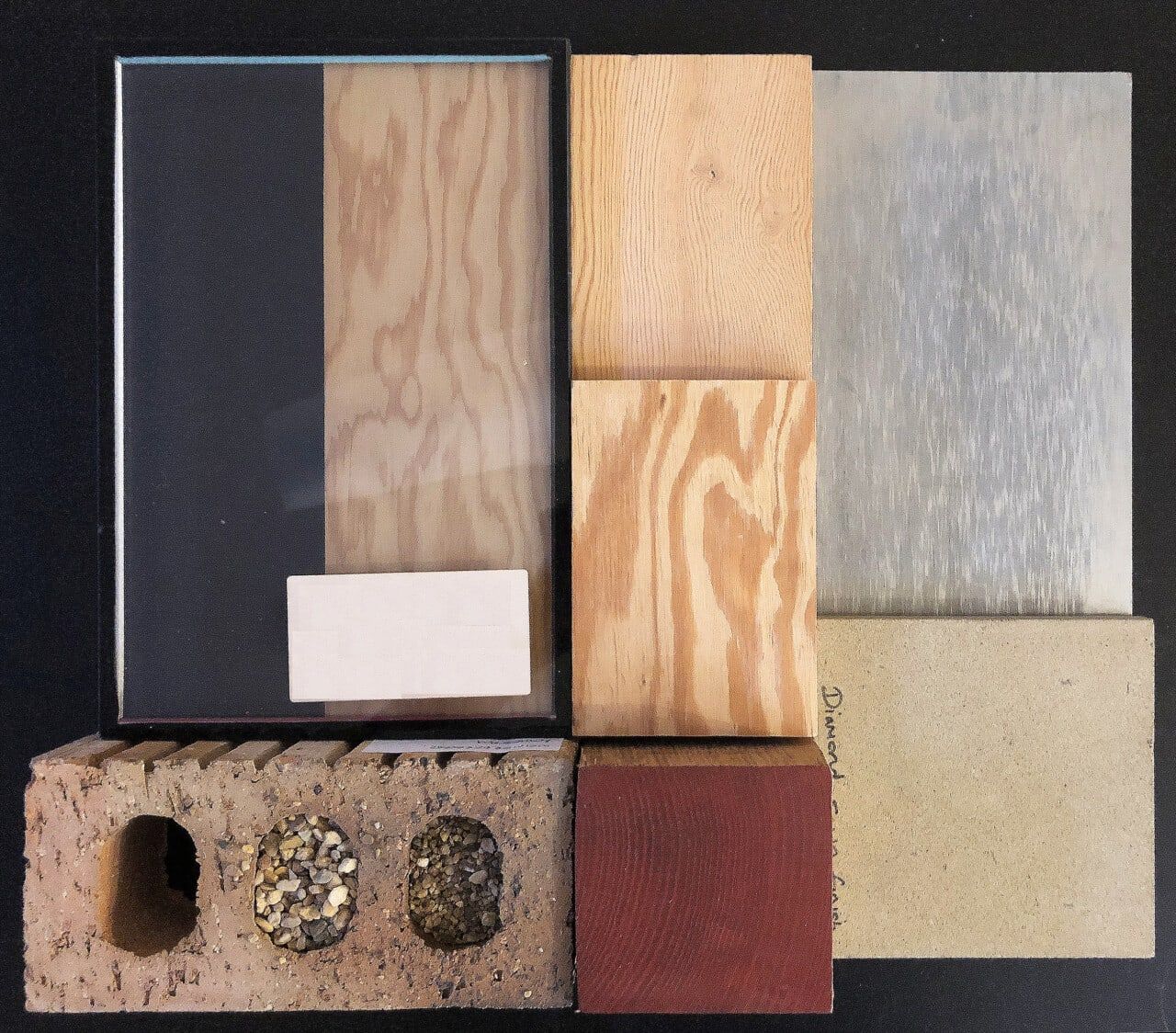
- Douglas fir timber frame, Structural Grade 1-B to BS EN 975-1, with concealed connections, finished in Osmo UV Protection Oil
- Insulated walls with Douglas fir plywood cladding, finished in breathable Keim mineral paint suitable for listed settings
- Bauder Total Green Roof with Bauder Flora 5 seed mix; VMZINC Plus standing seam to planters and outlets
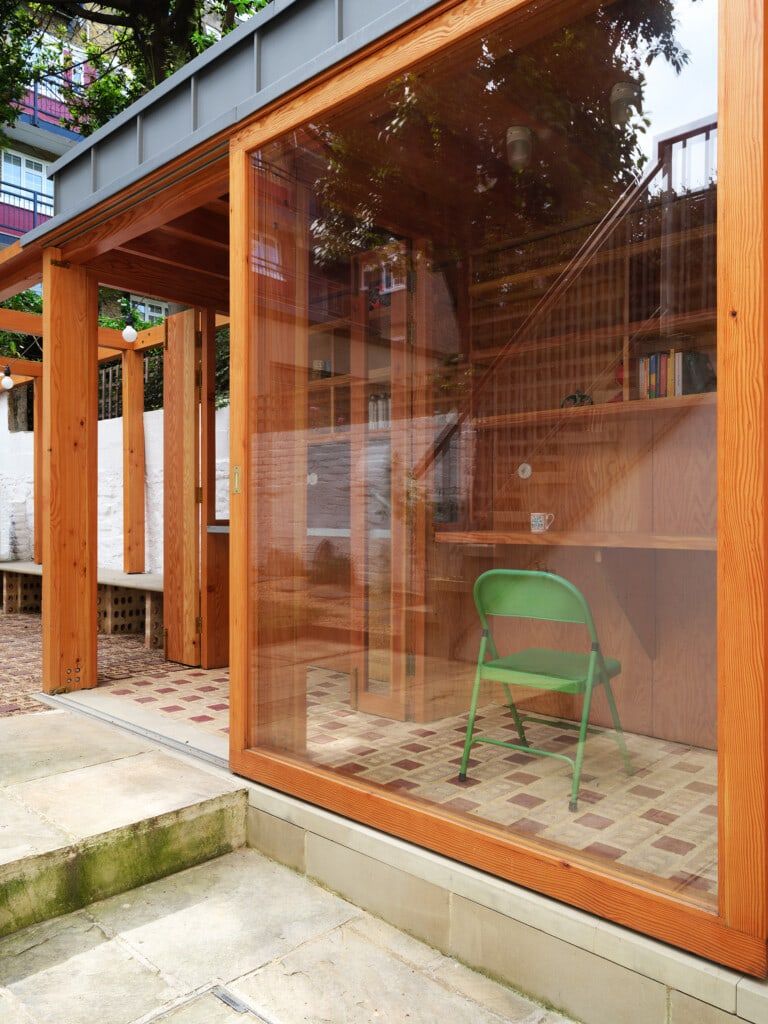
- Bespoke Douglas fir doors and windows with low-iron toughened glass and Schlegel AQ21 weather seals; Yorkstone thresholds
Interior and services
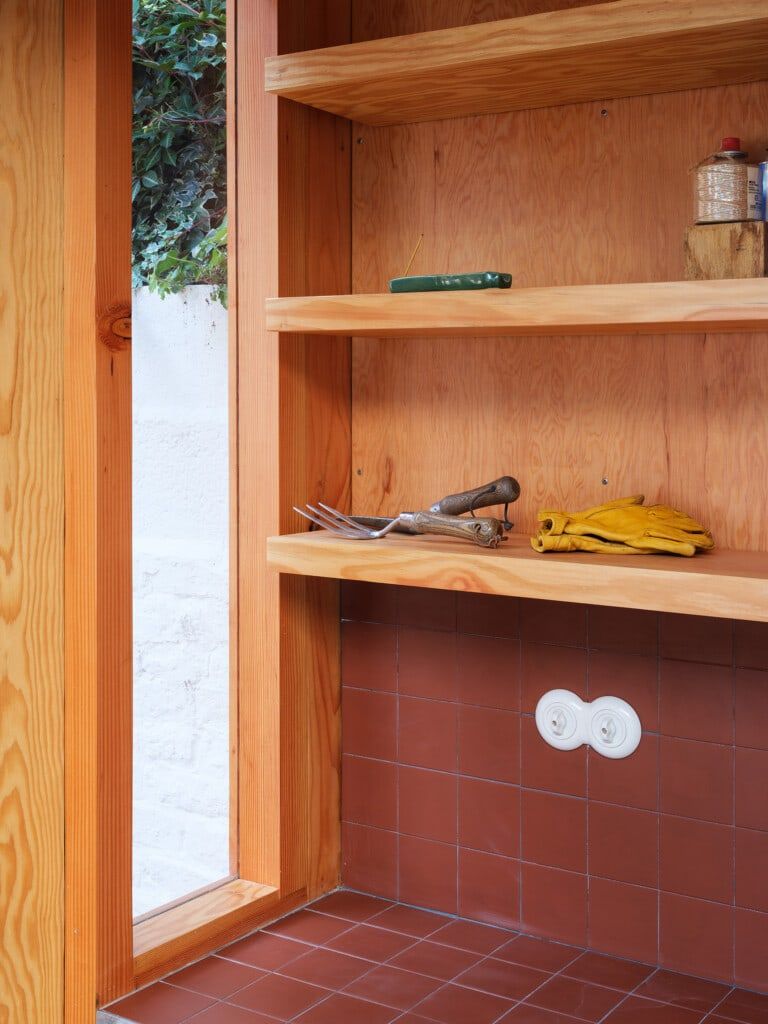
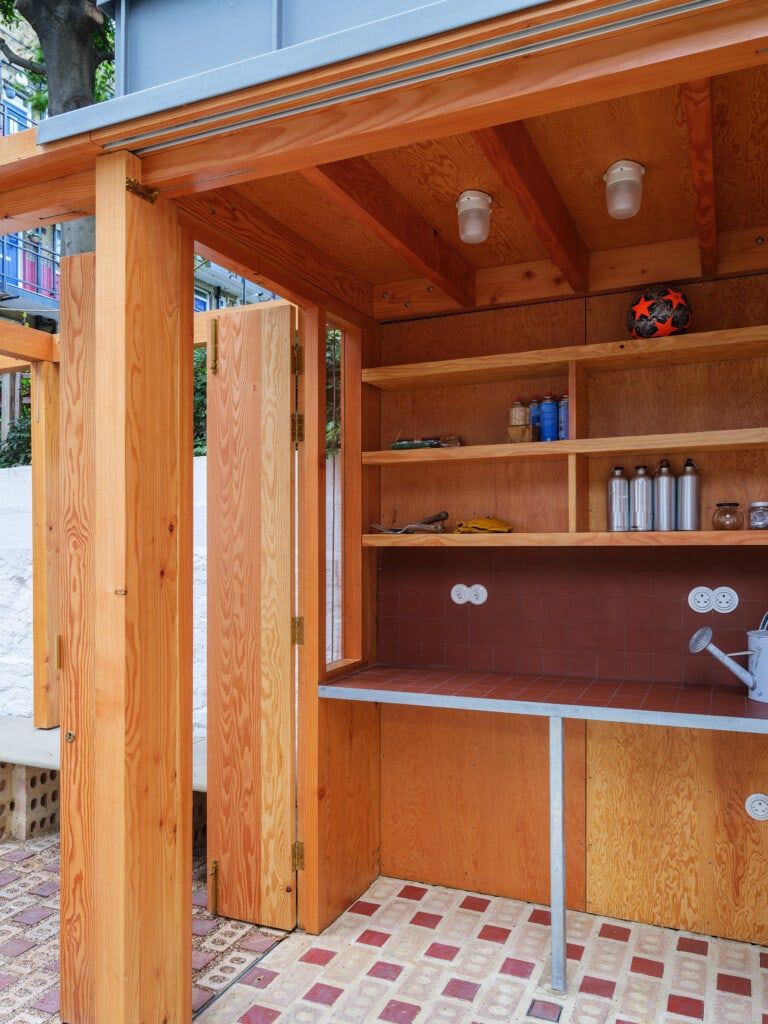
- WBP Douglas fir plywood linings finished with Rubio Monocoat Oil
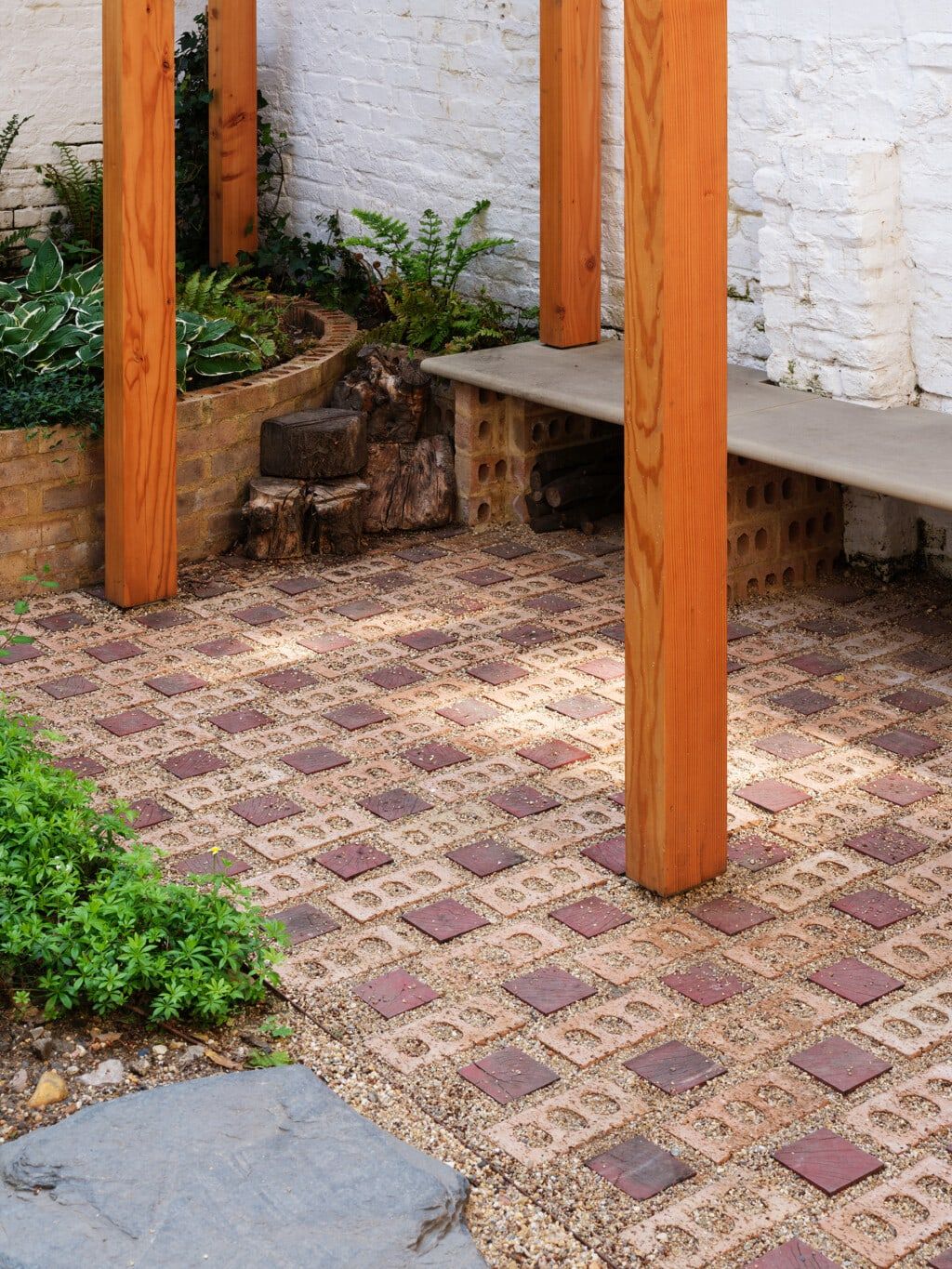
- Yorkstone and perforated clay brick floor; encaustic cement tiles to the servery
- Low-energy porcelain light fittings, festoon pergola lighting and weatherproof external sockets
Drainage and landscape
- Bauder Liquifibre upstands, threshold drains and gullies directing rainwater to the planting beds
- Reused Yorkstone paving, slate stepping stones and a new pond with boulder edging and native planting
What mattered on this project
- Foundations decided the design. Conventional strip foundations would have cut through the cherry tree’s roots and disturbed historic paving. Screw piles carried the lightweight timber frame with minimal excavation.
- Materials suited to a listed setting. Breathable mineral paint, natural timber finishes and reused stone kept the extension in keeping with the house and garden.
- Water managed on site. The green roof and drainage route rainwater into the planting rather than straight to the sewer.