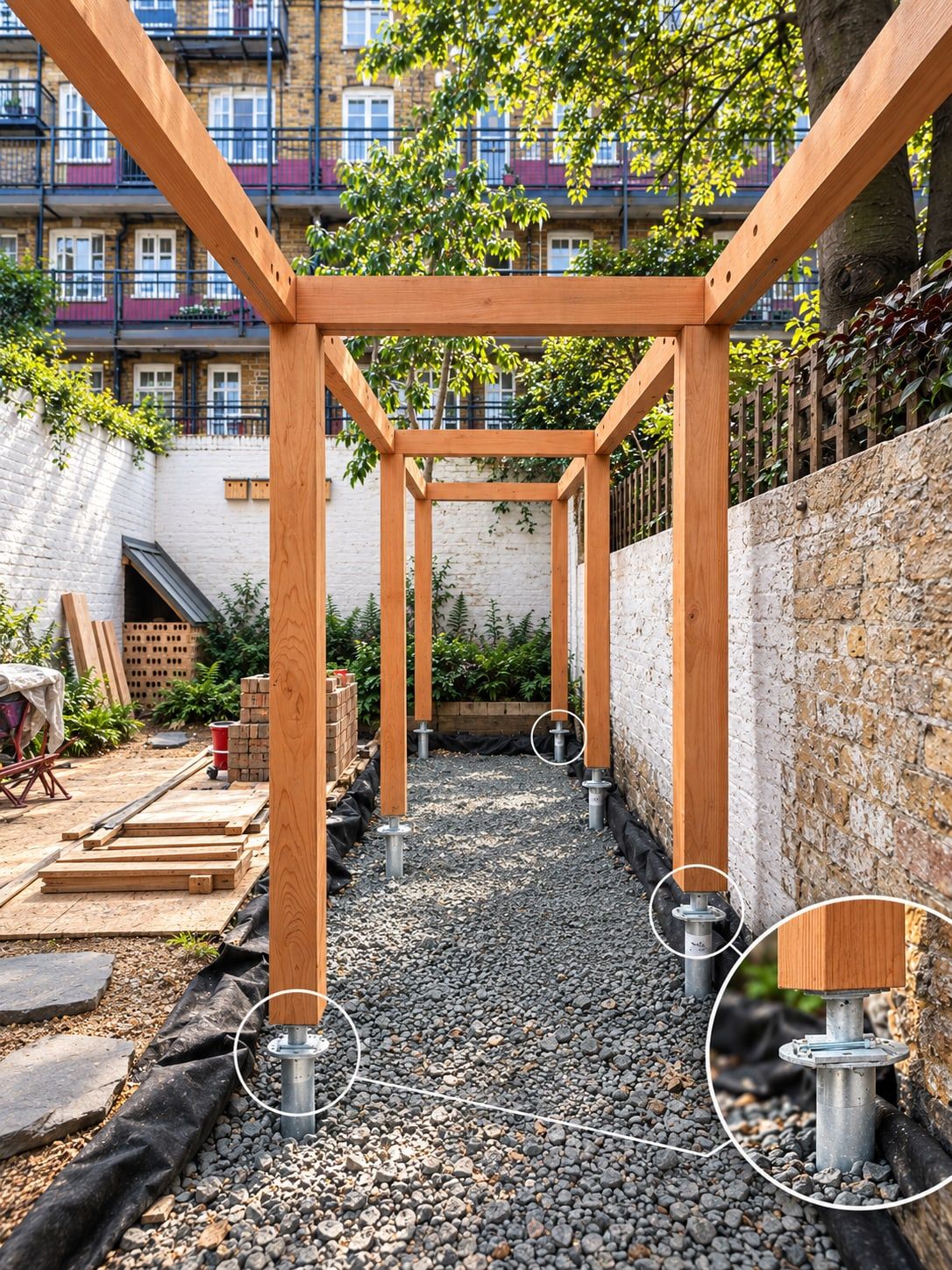
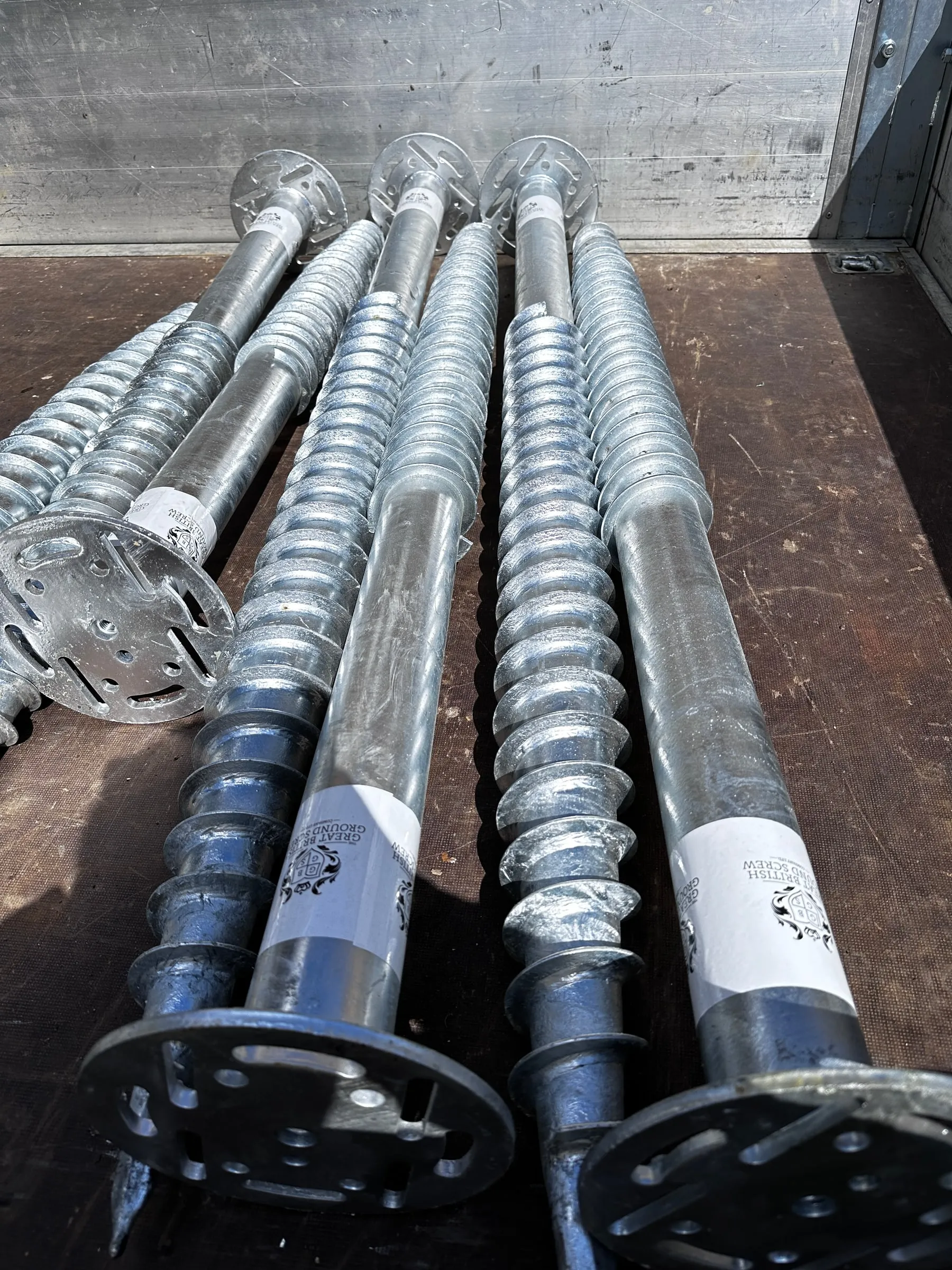
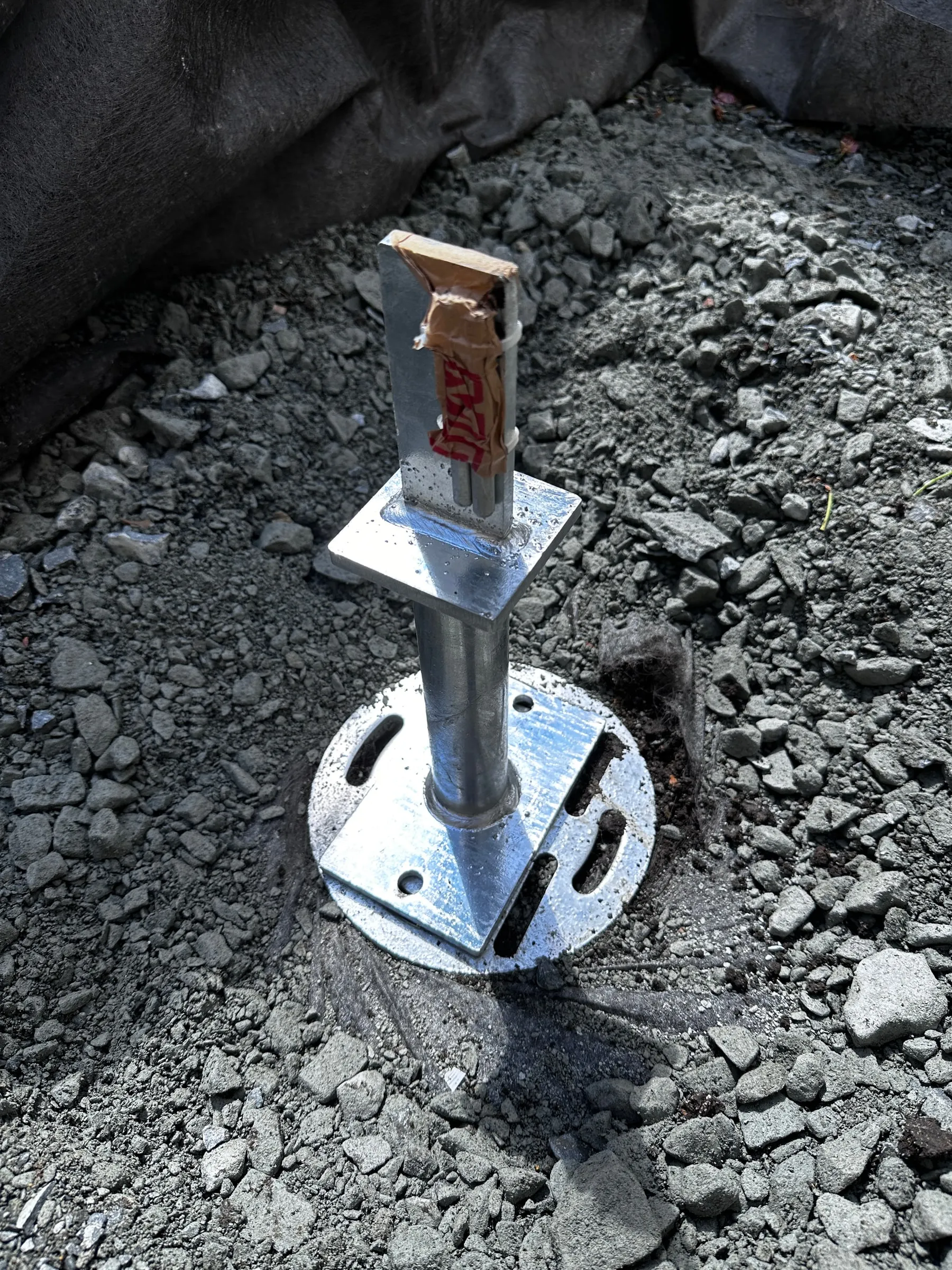
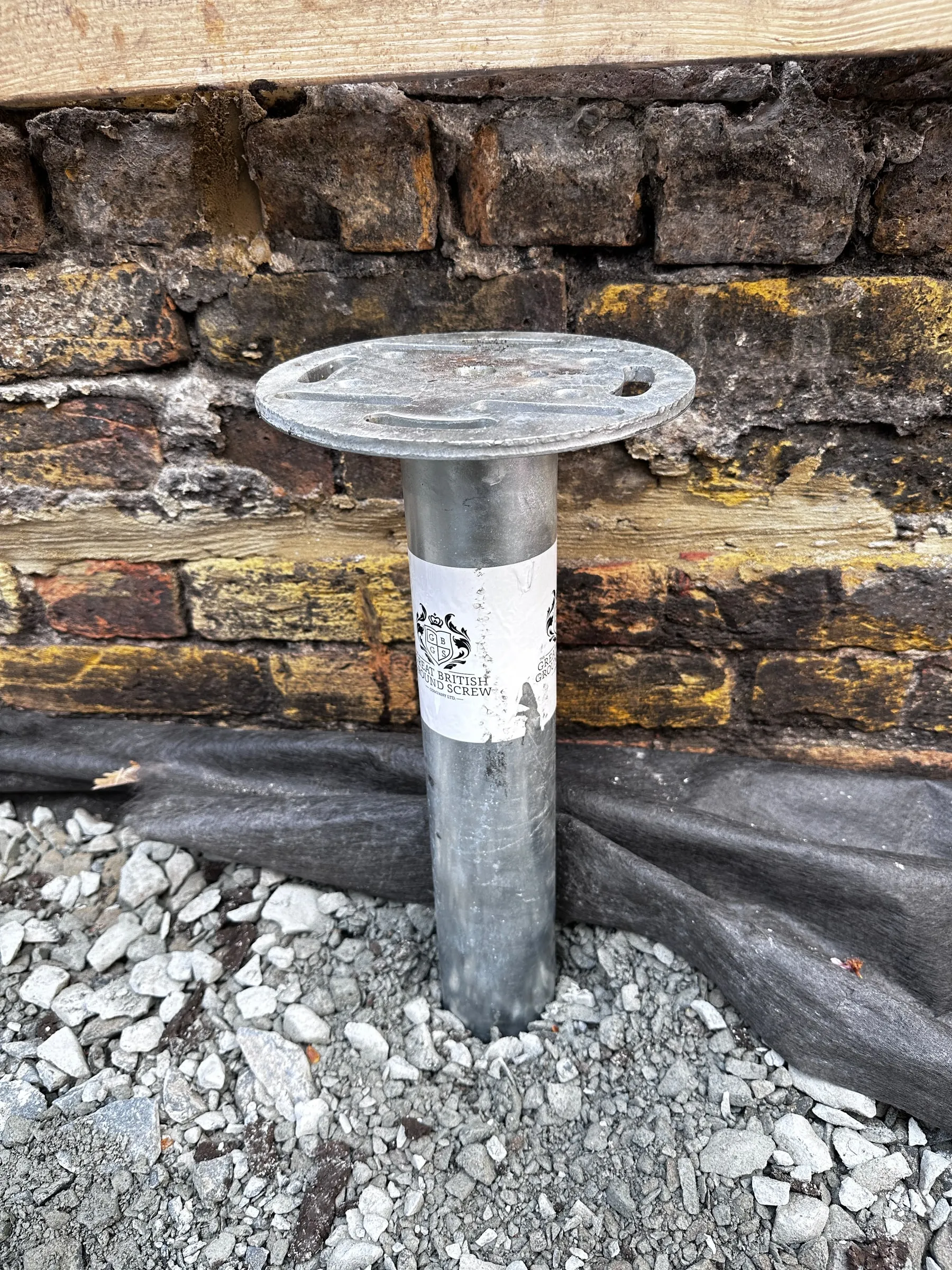
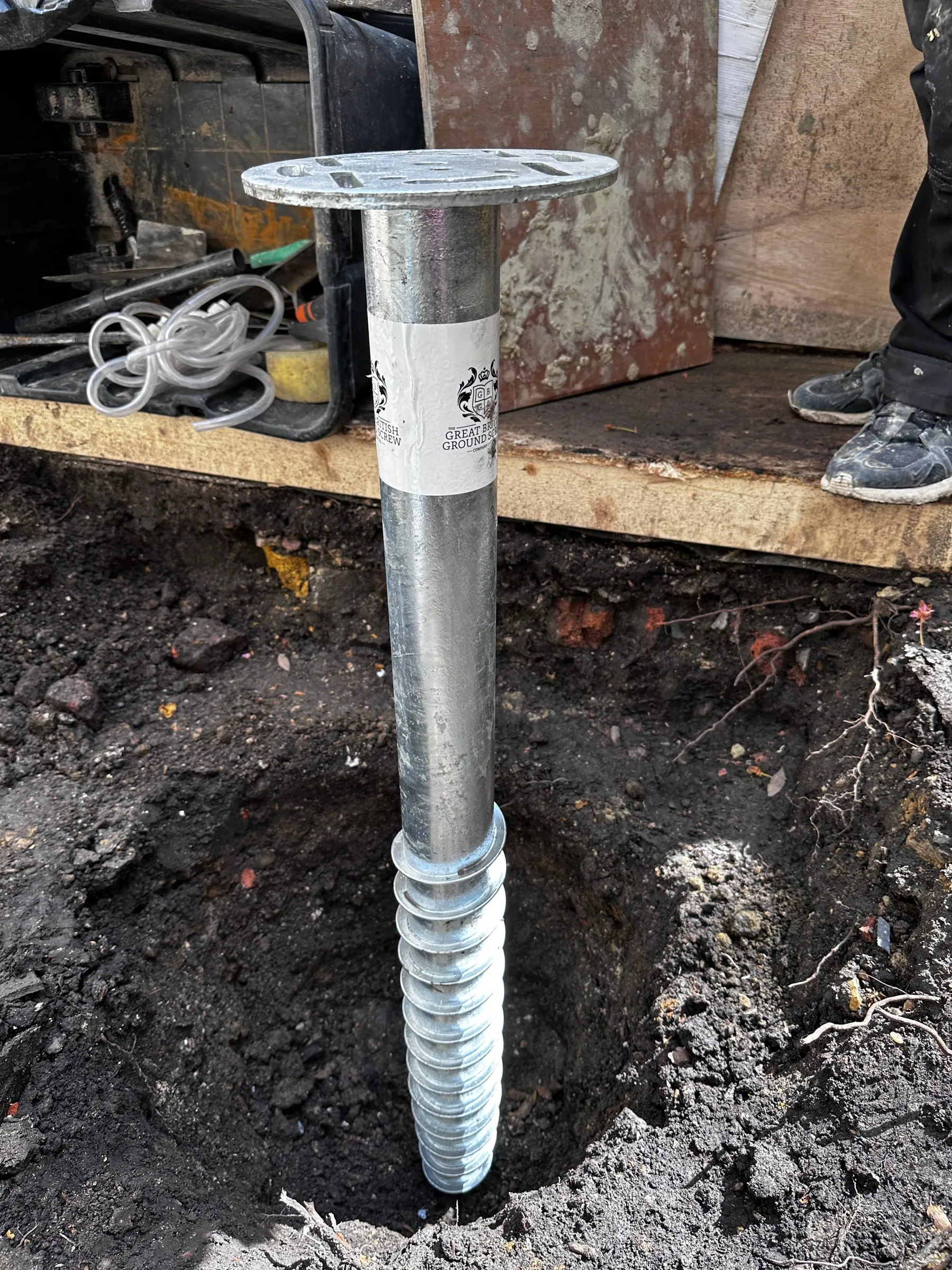
Ground screws are a foundation system made of galvanised steel tubes with a helical screw tip, driven into the ground by machine and topped with a flange or bracket that the structure fixes to. They can replace concrete pads and strip foundations for lightweight structures, with far less excavation and no wet concrete.
How ground screws work
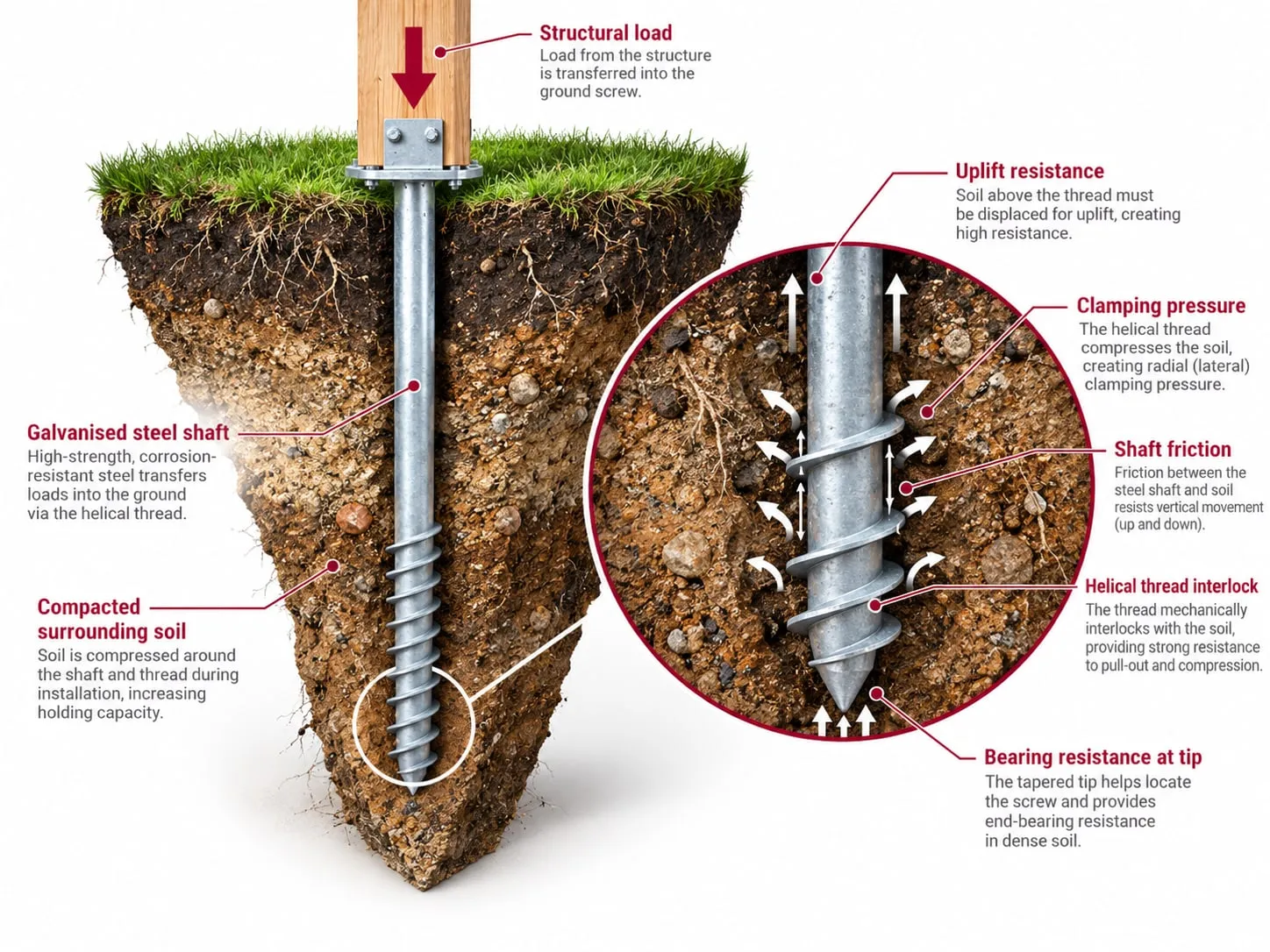
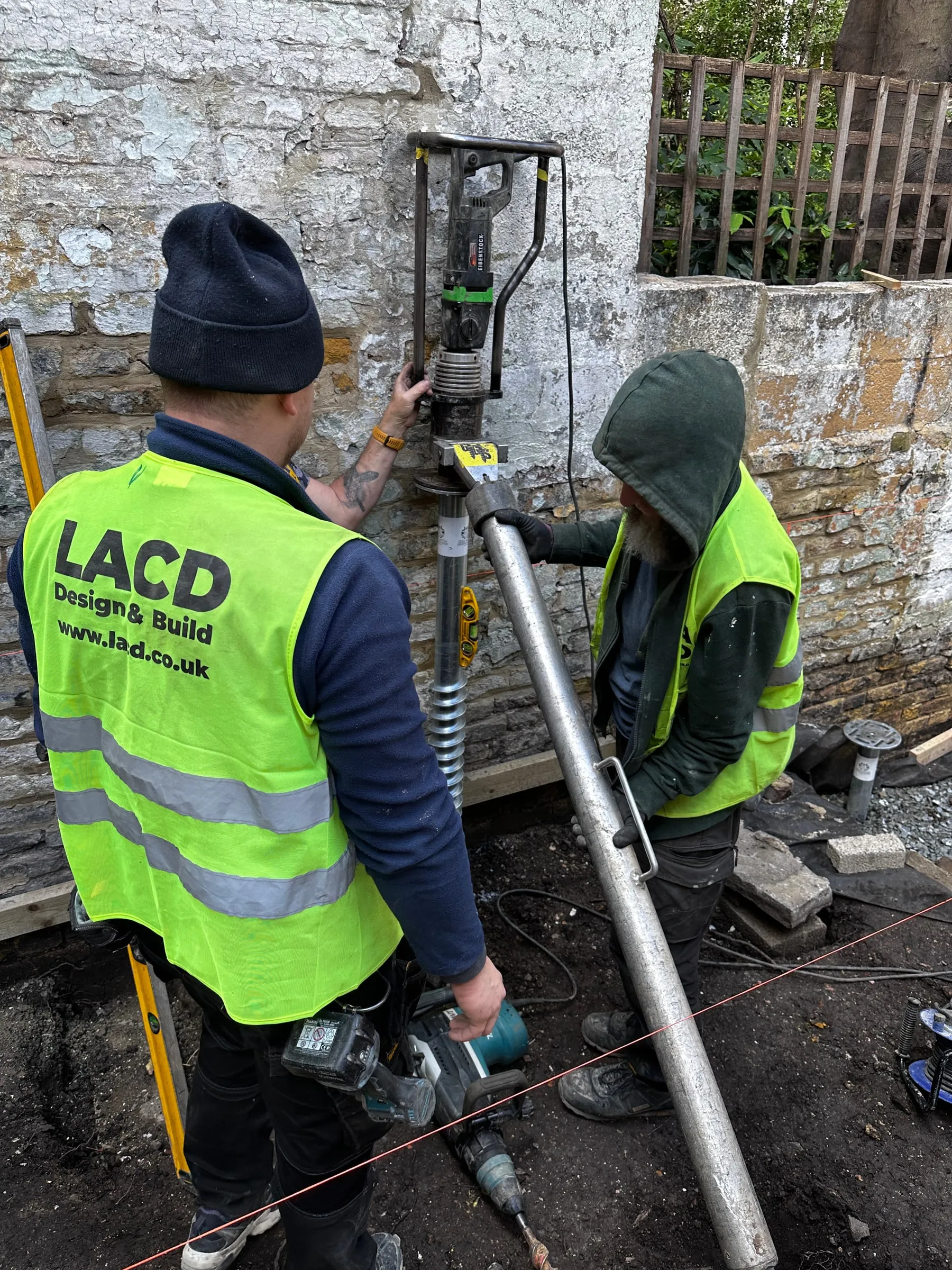
Each screw is turned into the soil to a design depth, usually with a hydraulic driver. The helix compresses the surrounding ground and transfers loads into it. Extension pieces allow deeper installation where the upper ground is weak. Once installed, the screws can be loaded immediately, with no curing time.
Advantages
- Lower carbon: no concrete, which is one of construction’s largest sources of embodied carbon.
- Minimal excavation: little or no spoil to remove, which matters in London back gardens with no side access.
- Protects roots and existing surfaces: screws can be positioned between tree roots and under lifted paving, then the paving relaid.
- Fast: installed in hours, and ready to build on straight away.
- No water or curing: no mixing, no drying time, and works can continue in cold weather.
- Low groundwater risk: no cementitious run-off or chemicals into the ground.
- Removable: screws can be unscrewed and reused, leaving the ground largely undisturbed.
Where they work well
- garden rooms, studios and home offices
- lightweight timber-framed extensions
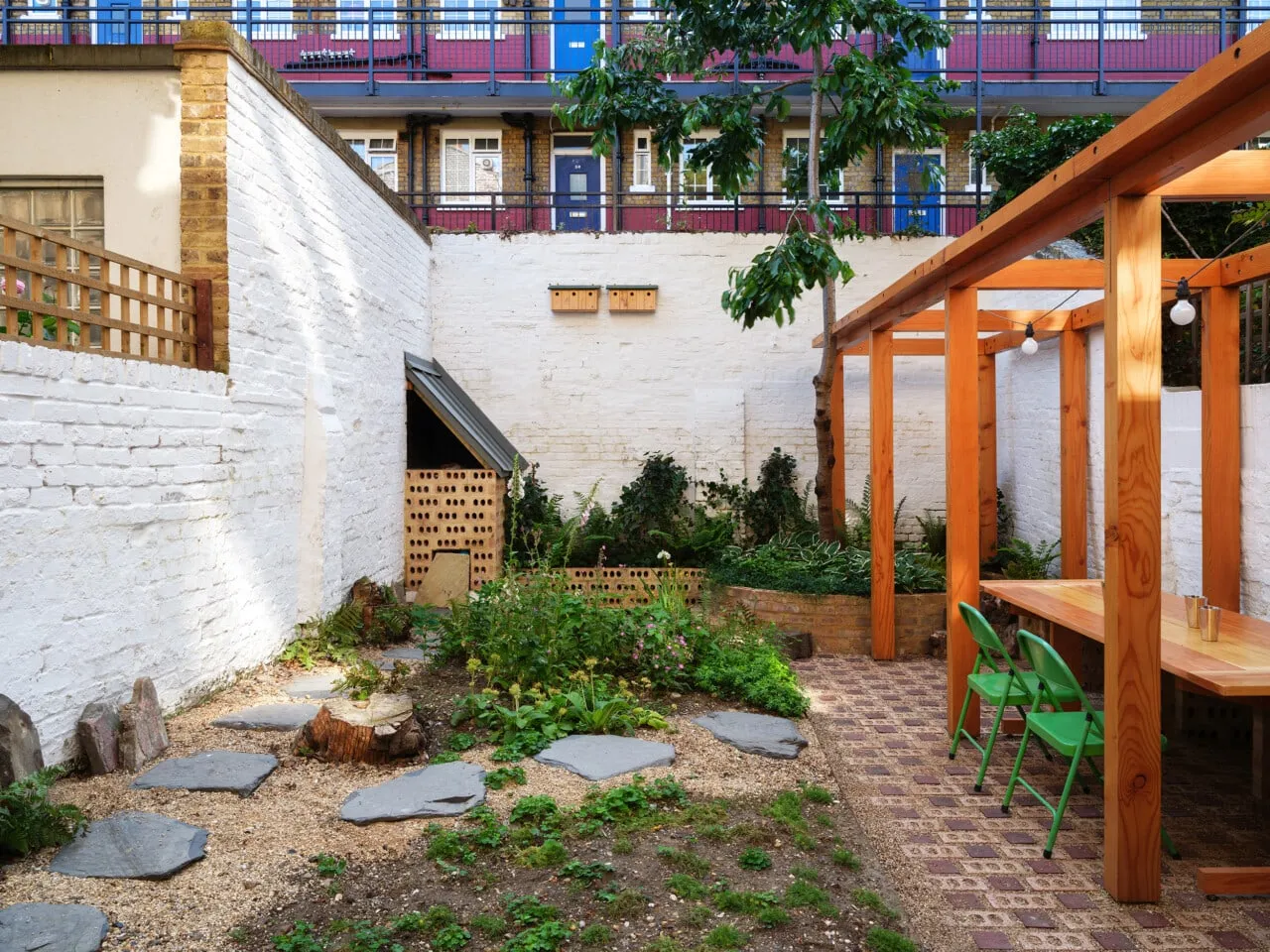
- decks, walkways, pergolas and canopies
- sites with tree roots, historic paving or difficult access
What to check first
- Engineering design: the number, size and depth of screws must be designed by a structural engineer for the actual loads.
- Ground conditions: buried rubble, old foundations or very soft ground can make screws unsuitable. Trial installations or pull-out tests confirm capacity on site.
- Building Control: where the structure needs approval, as an extension does, the foundation design is submitted with the application.
- Corrosion protection: screws should be hot-dip galvanised to BS EN ISO 1461, with certification and installation records provided.
Ground screws in practice
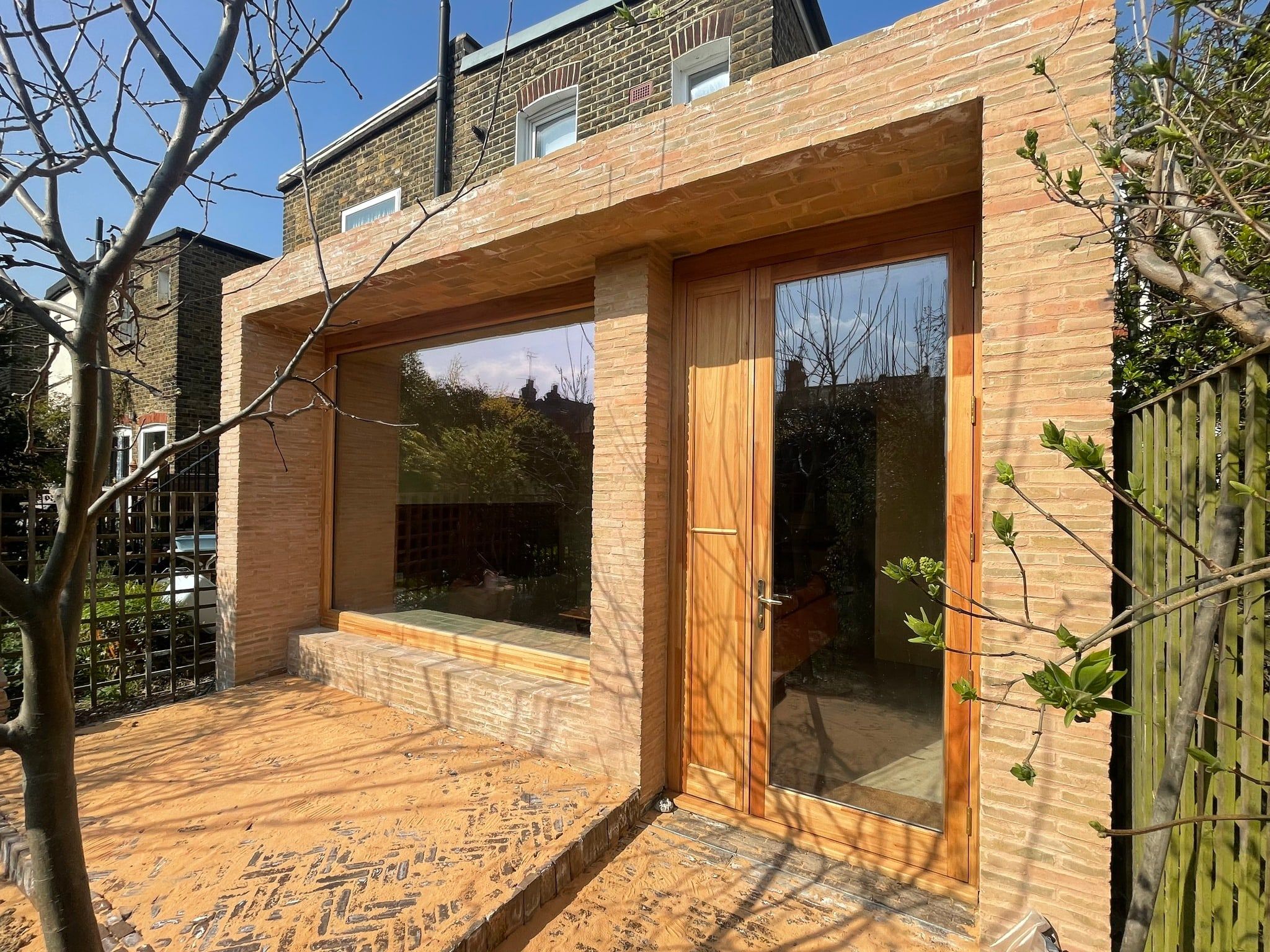
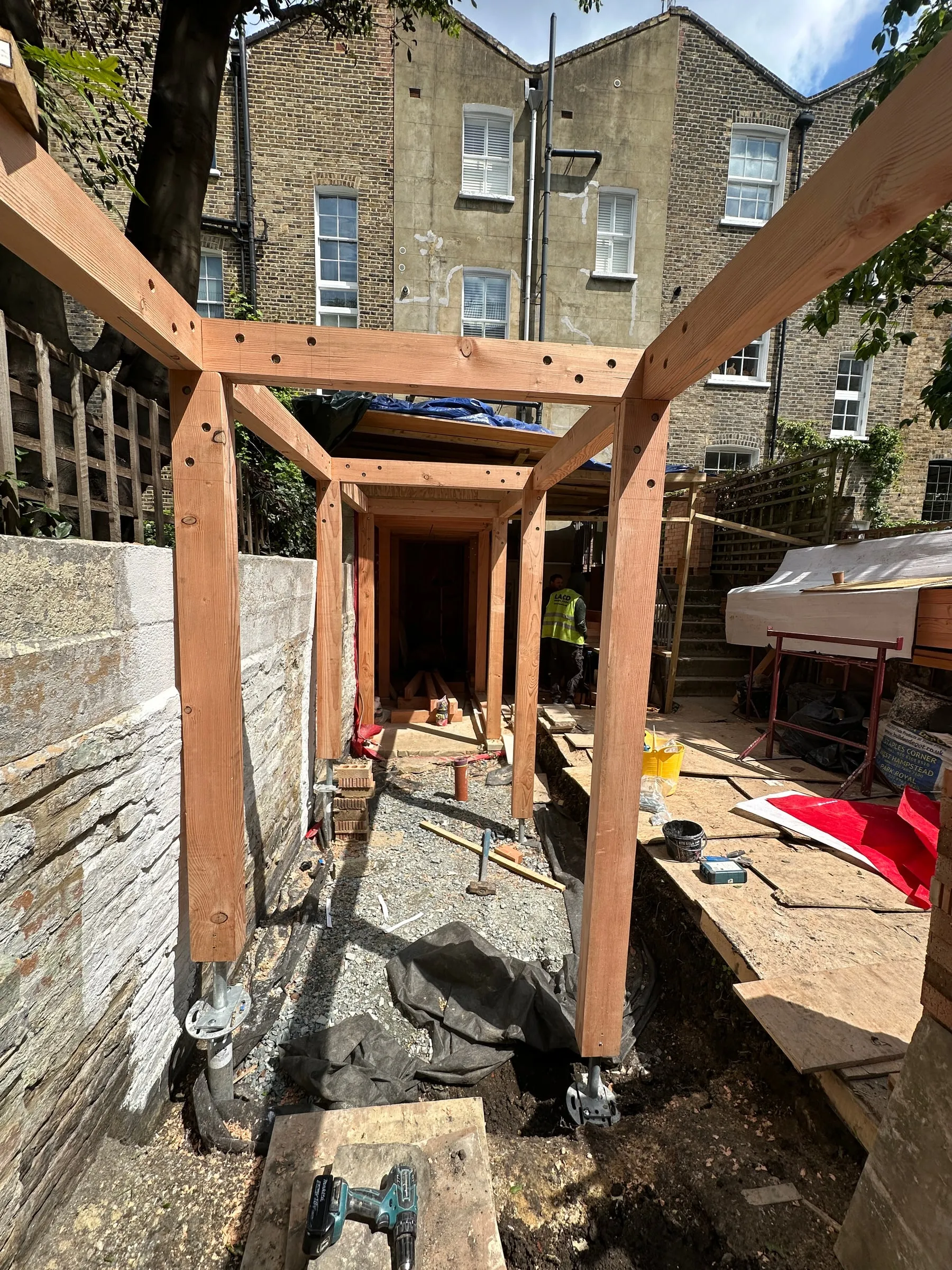
At Shepherdess Walk, a garden extension to a Grade II-listed townhouse in Islington, conventional foundations would have cut through the roots of a mature cherry tree and disturbed historic Yorkstone paving. Screw piles carried the lightweight Douglas fir frame with minimal excavation, and the paving was lifted, stored and relaid.
Considering ground screws?
They are not right for every structure, but for lightweight buildings on sensitive or awkward sites they are often the best option. Contact us to discuss your project. See also Douglas fir in structural framing.